When the Casino Arrived on the Page
Explore how casino imagery shapes atmosphere in fiction and illustration, with practical ways to make a scene vivid without drawing or describing every detail.
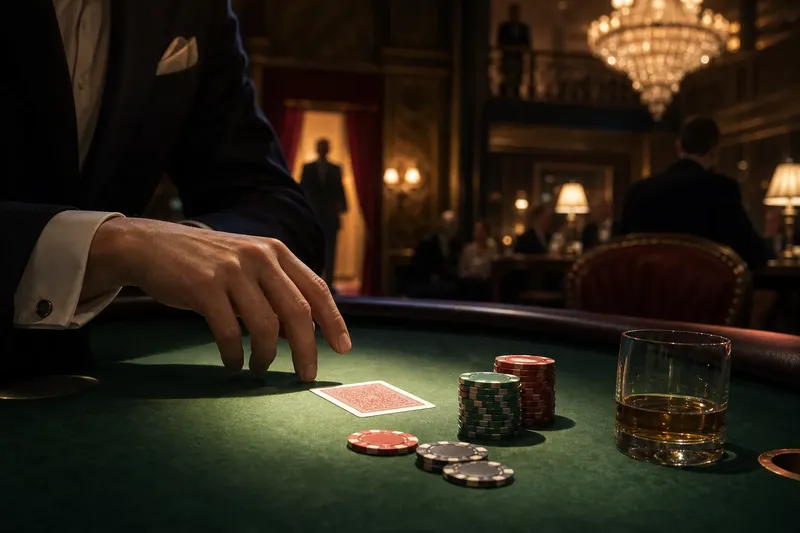
A green tablecloth catches a strip of lamplight; somewhere beyond the page, a chair scrapes across the floor. Casino imagery can make a reader imagine a whole room without showing its floor plan. The craft lies in making a few details belong together.
For writers and illustrators, a casino is a useful designed setting: it can feel ceremonious, uneasy, glamorous or dreamlike. Its objects carry social meaning, but the page need not explain each one. A chip can be a prop, a marker of status or simply a bright shape against dark felt.
How does casino fiction create a mood?
A list of tables, lamps and patrons tells readers what occupies a room. Mood arrives when a detail changes how someone experiences it. A chandelier might seem grand to a first-time guest, then oppressive to a character who has waited beneath it.
That shift gives the setting a point of view. Instead of describing the room like a catalogue, let a character notice what matters to them: the dealer’s still hands, a damp sleeve or the pause before a name is called. Each detail becomes part of the character’s private reading of the scene.
Illustration can make a related choice through visual emphasis. A hand held above the table may carry more tension than a fully rendered crowd. The room becomes specific through what the image makes difficult to ignore, not through an inventory of furnishings.
What can an image leave outside the frame?
A cropped doorway, a partial reflection or a balcony fading into shadow can imply space beyond the picture. The omission invites a question, but it should still feel deliberate: a viewer needs a foothold, such as a visible table edge or a figure turned toward the unseen area.
Prose can withhold information in time. A character may hear a soft knock before learning which door it came from, or notice that the dealer has stopped speaking. The reader stays close to that character’s uncertainty rather than receiving an all-knowing tour of the room.
These methods do different work. An illustration lets the viewer choose where to look and when to notice a clue. Prose can delay a clue or revise its meaning as the scene unfolds. Neither medium needs to fill every corner; each can make absence feel intentional.
Which details make a casino scene feel imagined?
Useful details tend to do more than one job. A reflective surface can establish the room’s finish while distorting a face; a quiet spectator can suggest both social pressure and a possible witness. Before adding another object, ask what it changes in the scene.
- Room cue: If a table edge or doorway does not help orient the reader, add one clear landmark; if the layout is already legible, leave out extra furniture.
- Light cue: If a lamp’s reflection draws attention to the intended focal point, keep it; if it competes with the character’s face or action, soften or remove it.
- Human cue: If a gesture changes the scene’s feeling, such as a hand pausing above a card, retain it; if a figure merely fills space, simplify or omit that figure.
- Sound cue: If a scrape, call or hush interrupts the scene at a meaningful moment, use it; if several sounds compete, keep the one the viewpoint character would notice first.
- Object cue: If a chip, card or glass reveals character or tension, give it a clear role; if it is only decorative, remove it or let it recede.
- Empty space: If an unoccupied chair or dark corner raises a useful question, preserve the gap; if it reads as an accidental hole, add a visual connection or close the space.
The point is not to reproduce a real casino faithfully. A fictional setting can rearrange architecture, light and objects, provided its choices support the same emotional logic. A sparse, stylized room may feel more coherent than a crowded scene whose details pull in unrelated directions.
How do novels and illustrations handle atmosphere differently?
Prose unfolds in sequence. A writer can follow a character’s gaze from a bright doorway to a card left face down, allowing each observation to alter the next. An illustration presents those relationships together, though viewers may discover them in their own order.
That distinction shapes suspense. In prose, a figure in the balcony can remain unnamed until the character looks up. In an image, the figure might be visible from the start but small enough to escape notice. Typography and page layout add another layer: a caption set apart from a crowded image can feel detached, while text woven around an open composition may seem closer to a character’s wandering attention.
What is not worth the effort? Naming every lamp, drink and garment just to prove that a room is elaborate. Extra detail can turn a charged scene into set dressing; keep the objects that affect movement, attention or interpretation.
How can a casino scene shift from layout to mood?
Imagine an illustrator beginning with a fictional room containing three tables, overhead lamps and a crowd. The initial sketch makes the entrances and tables easy to identify, but the scene feels merely busy. The illustrator removes several background figures, leaves one chair empty beside the nearest table, directs a narrow patch of light toward it and places a partly obscured figure at the doorway. The resulting composition keeps the room understandable but shifts its mood toward watchfulness; the tradeoff is a less lively crowd.
A writer could make a parallel revision: replace a paragraph listing the room’s furnishings with the sound of that empty chair scraping, then let the viewpoint character wonder who moved it. The scene gains a personal disturbance but reveals less about the décor. In either medium, the change comes from choosing what the audience notices and what remains unresolved.
What questions help readers understand casino imagery?
What makes casino imagery feel vivid in fiction?
A vivid setting connects sensory details to a character’s attention. Light, sound or gesture matters when it changes what the character expects, fears or notices next.
How can an illustration suggest a room beyond its frame?
Cropping, perspective and shadow can imply doors, people or activity outside the image. A visible landmark gives the viewer enough context to imagine the larger space.
Why can a printed casino scene feel theatrical?
Focused light, deliberate entrances and watchful spectators can make the setting resemble a stage. The effect comes from how the scene arranges performance and observation, not from any single object.
Does a printed casino have to look realistic?
No. A stylized room can feel convincing when its visual and narrative choices support one another. Consistency matters more than architectural exactness.
What does atmosphere let a casino setting mean?
Once a scene’s emotional logic takes the lead, the casino can suggest spectacle, ritual, private uncertainty or a temporary break from ordinary surroundings. Those meanings do not reside automatically in a roulette wheel or velvet curtain. They come from the people who notice, handle or avoid those objects—and from the page’s decision about what the audience sees.
For readers examining casino imagery at RMIT Vietnam or elsewhere, trace a scene through its objects rather than asking only what room it depicts. Notice which item is touched, which is avoided and which remains unexplained. That small trail can reveal how a printed setting earns its atmosphere while leaving room for the reader to imagine the rest.